Showing posts with label american authors. Show all posts

Sunday, December 11, 2016

slick scott

 
The slicker was good-looking or clean-looking; he had brains, social brains, that is, and he used all means on the broad path of honesty to get ahead, be popular, admired, and never in trouble. He dressed well, was particularly neat in appearance, and derived his name from the fact that his hair was inevitably worn short, soaked in water or tonic, parted in the middle, and slicked back as the current of fashion dictated. The slickers of that year had adopted tortoise-shell spectacles as badges of their slickerhood, and this made them so easy to recognize that Amory and Rahill never missed one. The slicker seemed distributed through school, always a little wiser and shrewder than his contemporaries, managing some team or other, and keeping his cleverness carefully concealed.

From This Side of Paradise -- F. Scott Fitzgerald

[Pictured:  F. Scott Fitzgerald in the 1920s, hair definitely slicked]

Saturday, October 8, 2016

night at the opera


But they had; they undoubtedly had; for the low-toned comments behind him left no doubt in Archer's mind that the young woman was May Welland's cousin, the cousin always referred to in the family as "poor Ellen Olenska."  Archer knew that she had suddenly arrived from Europe a day or two previously... [a]s for the cause of the commotion, she sat gracefully in her corner of the box, her eyes fixed on the stage, and revealing, as she leaned forward, a little more shoulder and bosom than New York was accustomed to seeing, at least in ladies who had reasons for wishing to pass unnoticed.

From The Age of Innocence -- Edith Wharton

Pictured:  At the Opera --  Thomas Francis Dicksee, R.A.

Saturday, September 10, 2016

go holmes go

John Clellon Holmes (1926-1988) was a key member of the Beat Generation's founding circle, having met Jack Kerouac and Allen Ginsberg at a party in 1948 and thus beginning decades-long friendships.  Holmes and Kerouac -- both born on March 12th but Kerouac being older by four years -- became creative comrades as well, encouraging each other to observe and write and transform the happenings of their lives into literature.  Holmes' Go was published in 1952, before 1957's more famed On the Road, and though the novels involve many of the same characters in the roman à clef style, the tone of each book is quite different.

While On the Road has a generally more energetic, driven, Beat zeitgeist feeling, with the American post-war landscape rushing by, Go is New York-centric, at times claustrophobically so.  Bars "forlornly gathered the discontented into gaudy islands of warmth and alcohol," and the Manhattan backdrop is urban and landlocked.  Holmes' alter ego in Go is Paul Hobbes, a bright aspiring young writer living with his wife Kathryn.  And here we have another major difference between Go and On the Road -- the emotional and romantic complications of a true marriage.  In On the Road, Sal Paradise's marriage is mentioned as a thing of the past, in the rearview mirror, a vague relationship that's run its course.  Paul Hobbes is both anchored and grounded by his marriage to Kathryn, who works a day job to support him while he writes at home, and who is a strong-willed, passionate woman.  For the most part, Kathryn outrightly disapproves of Paul's "wild" friends and their excessive drinking, smoking, drug use and ambiguous morality, yet she also has a certain fascination for the likes of Gene Pasternak (Kerouac), David Stofsky (Ginsberg), and Hart Kennedy (Neal Cassady), and can't help but be drawn into their world.  She and Paul fight often, adding another claustrophobic element to Go, namely the drunken or sober squabbles in the Hobbes' apartment, but despite all the tension and friction, some sort of earthy magnetism seems to keep them from breaking apart.

In essence, Hobbes stays behind in New York while Pasternak and Kennedy surge westward into the pages of On the Road.  The prose of Go is more measured and dense than Kerouac's flowing narrative, but there are many fine moments and observations in Holmes' earlier novel.  Beyond a deeper perception of some of the female characters, Go gives a sense of this is probably how things really were among the NY Beat social set, warts and all.  Like the cruel, self-destructive tendencies of Bill Agatson (Bill Cannastra), the moody impulses of Pasternak, or the quirky, almost naive brilliance of David Stofsky.  And while On the Road is a definite American literary classic, Go surely should have a prominent place on the Beat bookshelf to add nuance and layers to the story, and for an intriguing variation of the same scene.

This generation may make no bombs; it will probably be asked to drop some, and have some dropped on it, however, and this fact is never far from its mind. It is one of the pressures which created it and will play a large part in what will happen to it. 

"This is The Beat Generation" -- John Clellon Holmes, The New York Times Magazine, Nov. 1952

Saturday, August 6, 2016

the literary legacy of philomena guinea

I had read one of Mrs. Guinea's books in the town library--the college library didn't stock them for some reason--and it was crammed from beginning to end with long, suspenseful questions:  "Would Evelyn discern that Gladys knew Roger in her past? wondered Hector feverishly" and "How could Donald marry her when he learned of the child Elsie, hidden away with Mrs. Rollmop on the secluded country farm? Griselda demanded of her bleak, moonlit pillow."  These books earned Philomena Guinea, who later told me she had been very stupid at college, millions and millions of dollars.

From The Bell Jar -- Sylvia Plath

Pictured:  Woman Reading -- Kuroda Seiki, circa 1890 (Tokyo National Museum)

Saturday, February 27, 2016

rich shaw, poor shaw

Irwin Shamforoff, better-known as Irwin Shaw, was born on February 27, 1913 and grew up in Brooklyn, New York, where he most likely did not live in the lap of luxury.  Shaw followed a similar path as other NYC-connected literary men of his generation (J.D. Salinger, Norman Mailer, Herman Wouk):  sons of immigrant families who attended college then served in World War II, with the war experience later providing inspiration for acclaimed fiction and/or film and theater adaptations. 

In Shaw's case, his 1948 novel The Young Lions put him on the literary map, with a later movie version starring Marlon Brando, Dean Martin and Montgomery Clift earning its share of award nominations.  Shaw, who also wrote for radio, theater and film himself, continued to have success on the big and small screen, and while this and particularly Rich Man, Poor Man surely boosted his bank accounts, he did seem to lose some of his purely writerly reputation along the way.  He produced some very well-crafted short stories, however, including "The Girls in Their Summer Dresses" and "The Eighty-Yard Run," the latter of which -- about the downward slide of a 1920s college football hero -- is excerpted here:

That was the high point, Darling thought, fifteen years ago, on an autumn afternoon, twenty years old and far from death, with the air coming easily into his lungs, and the deep feeling inside him that he could do anything, knock over anybody, outrun whatever had to be outrun...[h]e had practiced the wrong thing, perhaps.  He hadn't practiced for 1929 and New York City and a girl who would turn into a woman.

Irwin Shaw died in 1984 in Switzerland.  Unfortunately, the troubled marriage and heavy drinking of "The Eighty-Yard Run" were also reflected in his life beyond the typewriter, but if Shaw's boyhood dream was to be a successful writer, he surely managed that long football pass.

Friday, February 19, 2016

rest in peace miss lee


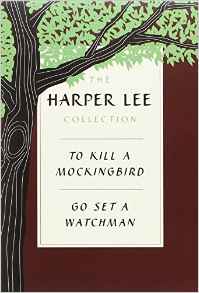
I think there's just one kind of folks. Folks.

To Kill a Mockingbird -- Harper Lee (April 28, 1926 - February 19, 2016)